Serving Buford, GA and surrounding areasOpen 24 Hours, Every Day  ·  (470) 516-0618
Call (470) 516-0618
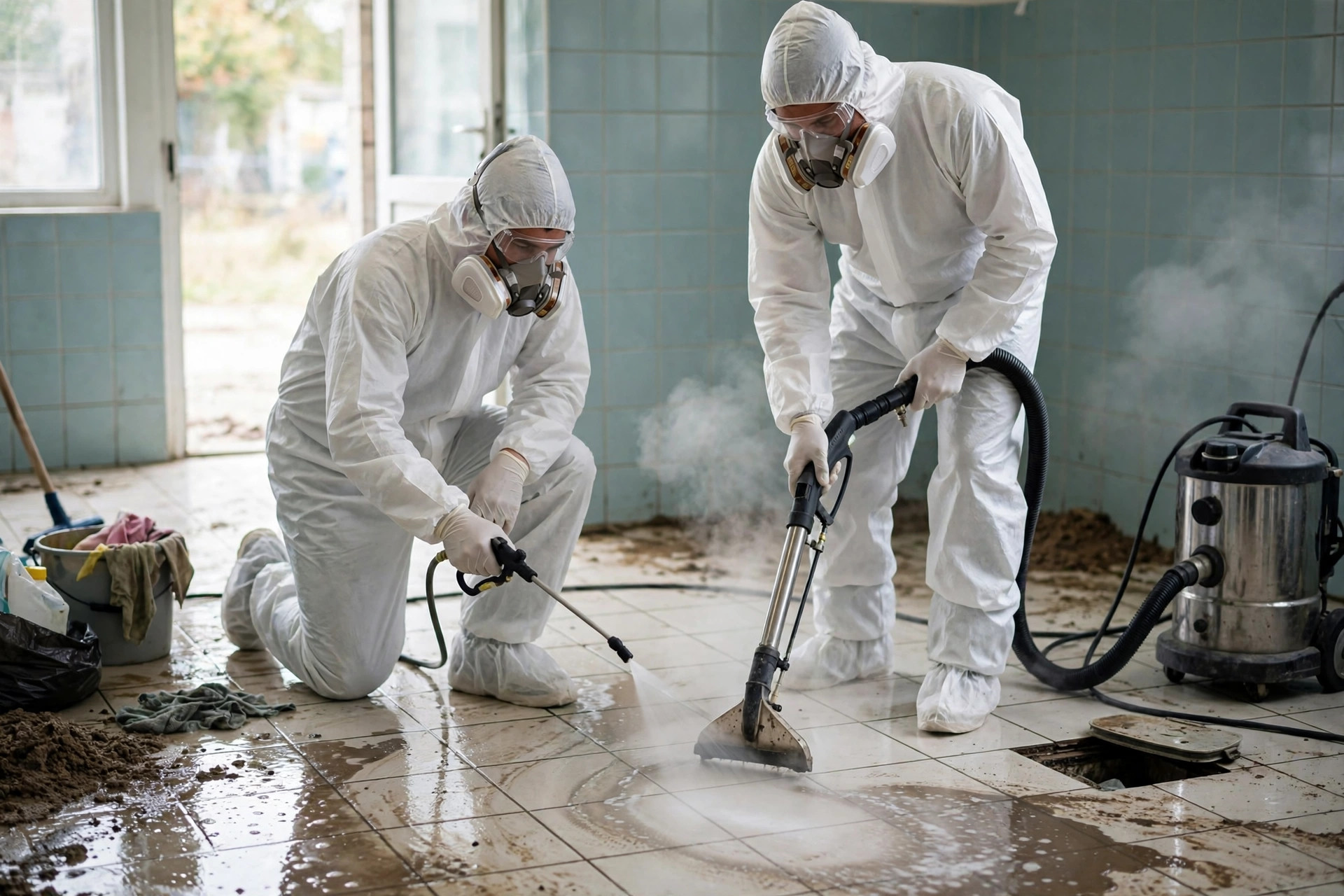
technicians in protective suits sanitising a floor after sewage cleanup
Home › Sewage Backup Cleanup

Sewage Backup Cleanup in Buford, GA: Removal, Sanitizing and Restoration

Sewage is Category 3 black water. The discipline of this page follows from that single fact: keep out, extract, remove what it touched, disinfect what remains, dry and verify.

Call (470) 516-0618

Sewage backup cleanup is the removal of sewage-contaminated water and materials from a property, followed by the cleaning, disinfecting and drying of the affected structure.

The tone of this page is deliberate: factual, CDC-accurate, and free of fear copy. Sewage is genuinely hazardous and genuinely manageable - in that order, by method.

What Is Sewage Backup Cleanup?

Sewage backup cleanup is the removal of sewage-contaminated water and materials from a property, followed by the cleaning, disinfecting and drying of the affected structure.

Under ANSI/IICRC S500, sewage is Category 3 - grossly contaminated water that can contain pathogenic and other harmful agents. That classification is why sewage cleanup is a separate service and not ordinary water removal with different water: the safety order, the removal canon and the disinfecting stage are what the category demands.

Sewage Backup Cleanup Process: 5 Steps

1

Keep the Area Closed and Safety First

The first step is a restriction: keep people and pets out of the affected area, and do not attempt household cleaning of sewage. The CDC's basis in one line: floodwater and sewage contact can cause diarrheal disease such as E. coli or Salmonella infection; wash hands after any contact, and keep children away from affected areas. Crew-side, protective equipment comes before any contact.

2

Sewage Extraction and Removal

Contaminated water and solids are extracted with equipment dedicated to contaminated work, and contaminated debris is bagged inside the work area and disposed of as contaminated waste. The general extraction method lives on its own page; here, the contamination differences are the method.

3

Removal of Contaminated Porous Materials

Porous materials that absorbed sewage - carpet and pad, drywall to the affected height, insulation, upholstered items - are removed. The decision table below is this step's rulebook. Contaminated porous material is never dried in place.

4

Cleaning, Disinfecting and Odor Treatment

All remaining hard surfaces and structure are cleaned, then disinfected - in that order, because disinfectants work on clean surfaces. Odor treatment follows for the sewage odor that survives the water's removal.

5

Drying, Verification and Restoration Handoff

The disinfected structure is dried to the verified dry standard with daily readings. Two gates close this job: disinfected, and verified dry. Restoration follows both.

What Causes Sewage Backups in Buford Homes?

Main Sewer Line Blockages

A blockage in the home's main line or the municipal connection sends sewage back through the lowest fixtures first - which is why basements and ground floors take sewage before anyone upstairs knows.

Tree Roots Growing Into Sewer Lines

Roots enter joints in older lines, catch debris and narrow the pipe until it backs up. Buford's older housing stock in the historic core carries the pattern.

Toilet Backups and Clogs

A clogged toilet or drain overflows into the room. The classification split matters and is stated precisely: toilet overflow with urine only and no feces is S500's Category 2 example; backflow that has passed beyond the trap is Category 3.

Septic Tank Overflow

Homes on septic systems - common outside Buford's city core - back up when tanks are full, drain fields fail, or lines block. Pumping and maintenance belong to septic services; the cleanup of what entered the home is this page.

Heavy Rain Overwhelming Drains and Lines

Intense rain infiltrates and overwhelms older lines, pushing water back inside. In a 49.74-inch rainfall climate, this is a recurring Buford cause, distinct from rising surface flood water.

Grease and Wipes Clogging Drains

Grease solidifies inside lines. Wipes - including products labelled flushable - do not break down like toilet paper and are a standard clog source. Behaviour causes are preventable causes.

Why Sewage Water Is Category 3 Black Water

Sewage can carry pathogenic bacteria - the CDC names the risk plainly: diarrheal disease such as E. coli or Salmonella infection from contaminated contact - along with viruses, parasites and chemical contaminants. The EPA adds the standing-water frame: sewage and wet materials are a breeding ground for microorganisms.

The exposure rules follow directly: no contact without protection; wash hands after any contact; children and pets stay out; nothing is eaten or drunk in affected areas. The category is also why this service opens with a safety step that clean-water services do not need - the hazard is managed by order and equipment, and stated without decoration.

After a Sewage Backup: What Must Be Removed and What Can Be Cleaned

The reason column is the whole logic: absorption. What sewage soaked into cannot be disinfected through; what it only touched can be.

Material / ItemDecisionReason (Contamination)
Carpet and padRemovedAbsorbed sewage through the material - cannot be disinfected through
Drywall and insulationRemoved to the affected heightPorous - contamination is held inside the assembly
Upholstered furniture and mattressesRemovedPorous - absorbed contamination
Tile, concrete, sealed surfaces and fixturesCleaned and disinfectedNon-porous - disinfectant reaches the contamination
Solid wood itemsAssessed case by caseFinish and depth of exposure decide - the one honest 'depends' in the table

Is Sewage Backup Cleanup Covered by Homeowners Insurance?

The short answer: sewage backup is generally not covered by a standard homeowners policy on its own.

The Insurance Information Institute classifies sewage backup with bottom-up water - the class that arrives from below, like flood. Coverage for it typically exists only where the homeowner purchased a water and sewer backup rider or endorsement before the loss. One careful conditional: where a backup resulted from a covered sudden event inside the home, parts of the resulting damage may be treated differently - your policy's words decide, and no page can decide for it.

Either way, the documentation duty is the same: the photos and records taken from the first step serve the claim, rider or no rider.

How Long Does Sewage Cleanup Take?

Extraction and contaminated removal come first - they begin on the first visit, and volume decides how many visits they take. Disinfecting follows removal. Drying then runs on the standard ranges, typically 3 to 5 days for Class 1 and 2 portions of the structure and longer for saturated assemblies. Restoration follows the two gates - disinfected, and verified dry. No fixed day count is promised for the whole job; how far the contamination spread is what sets its clock.
Sewage Backup Cleanup Questions

Is a sewage backup dangerous?

Yes. Sewage can contain pathogenic organisms, and the CDC is direct about the contact risk: diarrheal disease such as E. coli or Salmonella infection, with children kept away from affected areas. The behaviour rules are equally direct - no contact without protection, wash hands after any contact, and keep out until the area has been cleaned and disinfected.

Can I clean up sewage myself?

Only the smallest version of it: a minor toilet overflow, contained to a small hard-surface area, in the Category 2 pattern - gloves, cleaning, disinfecting, no porous materials involved. Anything beyond that limit - sewage through floors or walls, any Category 3 spread, carpet or drywall involvement, or a main-line backup still active - is professional work, for the reasons in the Category 3 section above.

Will sewage odor and mold follow a backup if cleaning is delayed?

Both, by separate mechanisms. Sewage residue inside porous materials keeps producing odor until the material is removed or the contamination is disinfected - which is why removal and disinfecting sit in that order in the process. And delayed drying after any water event reopens the EPA's 24 to 48 hour window; contaminated wet materials are the highest-risk version of it. Speed decides both.

Preventing Sewage Backups in Buford Homes

Related Water Damage Services in Buford

Why Buford Chooses Us for Sewage Backup Cleanup

24/7 emergency response, every day of the year

Local Buford team for Gwinnett and Hall counties

One team from mitigation to final restoration

Drying verified by moisture readings and moisture mapping

Documentation prepared for your insurance claim

Clear next steps and updates at every stage

Sewage Backup Cleanup Service Areas Near Buford, GA

Historic Downtown BufordHamilton MillMall of Georgia areaBogan Park areaLake Lanier Islands areaBuford Dam area
Sugar Hill, GASuwanee, GAFlowery Branch, GADuluth, GAOakwood, GALawrenceville, GABraselton, GAGainesville, GA

Based in Buford (ZIPs 30515, 30518, 30519), serving Gwinnett and Hall counties. The full service-area treatment is on the homepage.

Get 24/7 Sewage Backup Cleanup in Buford - Call Now

If your Buford home or business needs sewage backup cleanup, one call starts the work today - (470) 516-0618.

Call (470) 516-0618