Home › Flood Damage Cleanup
Flood Damage Cleanup and Restoration in Buford, GA
Flood water is treated as contaminated from the first minute - because by the S500 definition, it is. Extraction, removal, disinfecting, drying: in that order.
Flood water is treated as contaminated from the first minute - because by the S500 definition, it is. Extraction, removal, disinfecting, drying: in that order.
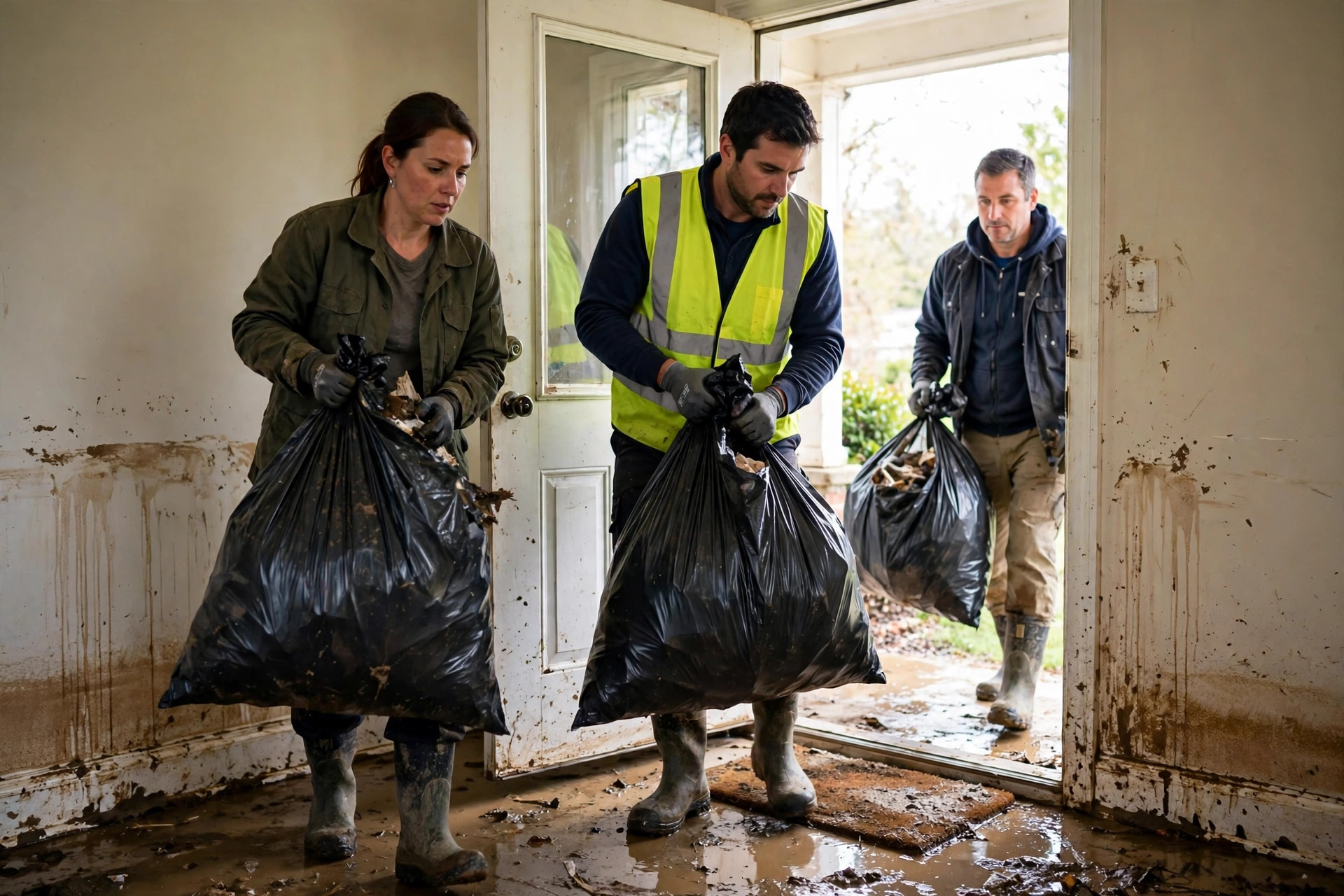
Flood damage cleanup is the removal of flood water, mud and debris from a property, the removal of materials the flood water contaminated, and the cleaning, disinfecting and drying of everything that remains.
Buford's context is water: the Atlanta metro averages 49.74 inches of rain a year, and low-lying and lake-area homes meet it first. This page covers the process, why flood water is always Category 3, what can be saved, and the insurance answer - including the FEMA definition that decides it.
Flood damage cleanup is the removal of flood water, mud and debris from a property, the removal of materials the flood water contaminated, and the cleaning, disinfecting and drying of everything that remains.
The classification drives everything: all surface flooding and rising water is Category 3 black water under ANSI/IICRC S500 - grossly contaminated by definition, before any test. Cleanup ends at a clean, disinfected, verified-dry structure. The repairs after that are reconstruction, phase two.
Electrical safety comes first - never operate power while standing in water - along with structural caution around saturated ceilings and floors. Then documentation: dated photos and readings before anything is moved. Flood claims are documentation claims.
Standing flood water is extracted, deepest first. The general method lives on our emergency water extraction page; the flood differences are mud and silt load, debris in the water, and Category 3 handling from the first minute.
Mud, silt and debris come out, and porous materials that absorbed flood water are removed - the save-or-remove table below is this step's rulebook. Contaminated material is never dried in place.
Every remaining hard surface and structural element is cleaned and disinfected. Flood water can carry sewage and microorganisms - the CDC warns it can cause diarrheal disease such as E. coli or Salmonella infection - and this stage is why flood cleanup is not just extraction plus drying.
The disinfected structure is dried with daily readings to the verified dry standard. Only then does restoration begin. No repairs are ever built over an unverified structure.
The most common Buford flood pattern: ground water and runoff collect below grade. The full basement treatment is on our basement water damage page; the flood discipline - Category 3 plus disinfection - applies in full.
Water entering across thresholds and through doorways wets whole floors at once - and saturates walls and ceilings where the event brings secondary leaks.
Homes near Lake Lanier tributaries and low ground take water first and hold it longest. The response is the same; the volumes are not.
Storm entry from above is covered first by tarping and board-up - the storm damage page owns that work. The flood cleanup that follows the entry is this page's job.
Retail, office and restaurant flooding adds a downtime clock to the water clock. The commercial treatment is on our commercial water damage restoration page.
On its way in, flood water picks up whatever the ground holds:
The CDC's central floodwater warning - contact risks diarrheal disease such as E. coli or Salmonella infection.
Household, garage and roadway chemicals dissolve and spread with the water.
The EPA's framing: standing water and wet materials are a breeding ground for microorganisms, including mold.
ANSI/IICRC S500 lists all forms of surface flooding and rising water as Category 3 examples - known before testing, by definition.
One rule decides the table: porous materials that absorbed Category 3 water cannot be disinfected through the material, so they are removed. Hard surfaces can be reached, so they are cleaned.
| Material / Item | Decision | Reason |
|---|---|---|
| Carpet and pad | Removed | Porous - absorbed contaminated water and silt through the material |
| Drywall and insulation | Removed where flood water reached | Porous - contamination is inside the wall assembly |
| Upholstered furniture and mattresses | Removed | Porous - cannot be disinfected through |
| Solid wood furniture | Cleaned and disinfected | Hard surface - disinfectant reaches the contamination |
| Tile, concrete, sealed stone | Cleaned and disinfected | Non-porous surfaces |
| Appliances and electronics | Assessed by a qualified technician | Never powered while wet - safety before salvage |
The short answer: standard homeowners insurance excludes flood. That exclusion is why flood insurance exists as a separate product, through the NFIP or private insurers.
The definition that draws the line comes from FEMA/NFIP: a flood is a general and temporary condition of partial or complete inundation of two or more acres of normally dry land, or of two or more properties. Rising-water losses sit outside homeowners policies because they meet that definition; a burst pipe inside one home does not, which is why the same storm can produce a covered claim and an excluded one in the same house.
What follows practically: document everything as if both policies were watching - dated photos and readings from step one serve either claim. And no one on this page will promise you an outcome on yours; carriers decide claims, we build the record they decide from.
Extraction and debris removal begin on the first visit, disinfection follows removal, and drying then runs on the standard ranges - typically 3 to 5 days for Class 1 and 2 portions of the structure, longer where Class 3 saturation or dense materials govern. Restoration follows verified dry readings and is scoped separately. What sets a flood job's clock is water depth, contamination load, and how much material must be removed.
Stay safe first: never operate power while standing in water, and keep out of contaminated areas. Photograph everything before you move it. Then call for extraction and cleanup. The full first-steps list - the canonical one for every kind of water damage - is in the questions section of our homepage.
Not while water is standing with power live, and not where the water is contaminated - which flood water is, by definition. Entry becomes reasonable when power is safely off, the category is understood, protective equipment is used for any contact, and saturated ceilings have been checked. The assessment decides; guessing is how people get hurt in flooded homes.
No. Drywall that absorbed flood water is removed, because it and the insulation behind it hold Category 3 contamination inside the wall assembly, where it cannot be disinfected - and removal is also how the cavity gets dried and verified. Drywall wet by clean Category 1 water is a different decision, made by readings on the drying page's criteria. The category, not the material alone, decides.
24/7 emergency response, every day of the year
Local Buford team for Gwinnett and Hall counties
One team from mitigation to final restoration
Drying verified by moisture readings and moisture mapping
Documentation prepared for your insurance claim
Clear next steps and updates at every stage
Based in Buford (ZIPs 30515, 30518, 30519), serving Gwinnett and Hall counties. The full service-area treatment is on the homepage.
If your Buford home or business needs flood damage cleanup, one call starts the work today - (470) 516-0618.