Serving Buford, GA and surrounding areasOpen 24 Hours, Every Day  ·  (470) 516-0618
Call (470) 516-0618
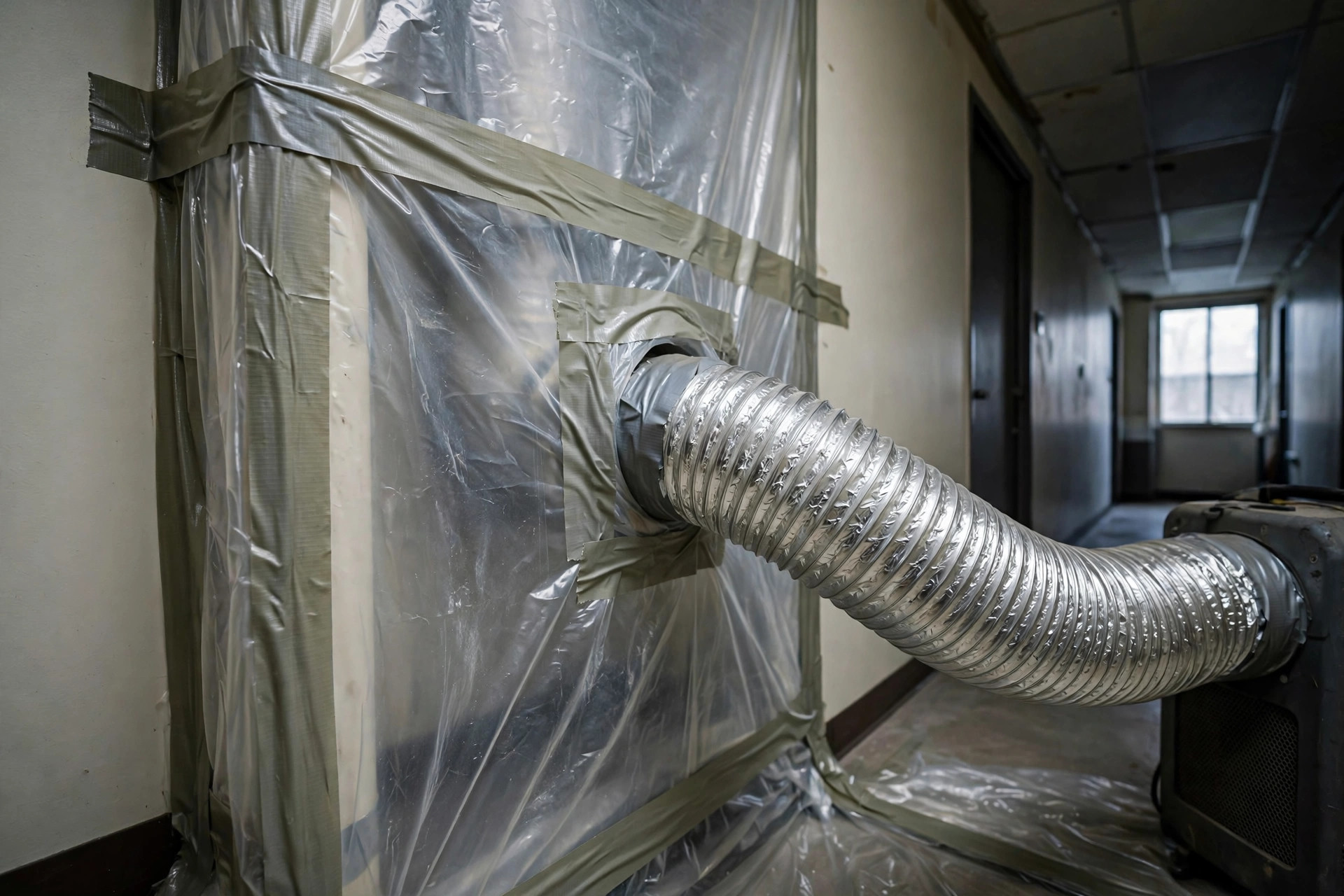
plastic containment barrier sealed across a hallway for mold remediation
Home › Mold Remediation

Mold Remediation in Buford, GA: Containment, Removal and Prevention

Mold is a moisture problem with a visible symptom. Remediation contains it, removes it, cleans what remains - and corrects the moisture source, verified dry, so it does not come back.

Call (470) 516-0618

Mold remediation is the containment, removal and cleaning of mold growth in a property, together with correcting the moisture problem that caused it.

In Buford homes, mold follows water: a leak that dried slowly, a flood that was never verified dry, humidity that never drops. This page follows the EPA's guidance throughout - including the parts of that guidance that argue against overselling, because accurate restraint is what this service should sound like.

What Is Mold Remediation?

Mold remediation is the containment, removal and cleaning of mold growth in a property, together with correcting the moisture problem that caused it.

One terminology rule governs this page, and it comes from the EPA: remediation returns mold levels to normal, natural levels. It does not make a property mold-free, because mold spores are part of the natural environment, indoors and out - and the EPA is explicit that it is impossible to eliminate all mold. Any service that promises total elimination is promising what the science does not support. Remediation also includes fixing the source: cleaning alone, with the moisture still present, is not remediation.

Mold Remediation Process: 6 Steps

1

Mold Inspection and Assessment

We inspect visible and suspected areas and check the moisture behind them - mold is a symptom, so the assessment maps both the growth and its water source. Everything is photographed and documented. The output is the remediation scope: areas, materials and the containment plan.

2

Containment of the Work Area

The work area is sealed with containment barriers and placed under negative air pressure. Containment comes before any disturbance, for a mechanical reason: removing mold without it redistributes spores into clean areas of the home.

3

HEPA Air Filtration

HEPA air scrubbers run inside containment during removal and cleaning, capturing airborne spores as they are released. Filtration is not an after-step - it runs while the work happens.

4

Removal of Mold-Damaged Materials

Porous materials with established growth - drywall, insulation, sections of carpet and pad - are removed and bagged inside containment. Hard surfaces are cleaned and treated in place. Porous plus established growth means removal; that rule does not bend.

5

Cleaning and Antimicrobial Treatment

Remaining surfaces in and around the work area are cleaned, antimicrobial treatment is applied where the scope requires it, and settled dust is HEPA-vacuumed - spores settle, so the cleaning pass is part of remediation, not an extra.

6

Drying Verification and Moisture Correction

The moisture source from step one - the leak, the flood path, the humidity problem - is corrected, and the structure is verified dry by meter. Containment comes down only after cleaning is complete and readings verify dry.

Signs You May Need Mold Remediation

Visible Mold Growth on Walls, Ceilings or Floors

Patches of growth in bathrooms, on basement walls, around windows or under sinks. Visible growth means the moisture condition that feeds it is present now, or was recently.

A Musty Odor That Does Not Go Away

A persistent musty smell with no visible mold usually means growth inside a wall cavity, under flooring, or in the HVAC area. Inspection comes first - see the testing position below.

Mold Appearing After a Leak or Flood

Growth showing days to weeks after a water event that dried slowly or was never verified. Wet materials not dried within 24 to 48 hours are exactly the cases the EPA's prevention guidance addresses.

Mold in Basements, Crawl Spaces and Bathrooms

Below-grade and wet-room areas run chronically humid. Georgia humidity keeps these spaces near the growth threshold without ventilation or dehumidification.

Allergy-Like Symptoms That Ease Away From Home

The EPA notes that mold exposure can cause allergic reactions and irritate the eyes, skin, nose, throat and lungs in mold-sensitive people. Symptoms that ease when you leave the property can be a reason to inspect. This page gives no medical advice beyond that framing - inspection is the step we can actually take.

Where Mold Grows After Water Damage

Growth follows moisture into predictable materials. Each item below names the place and the water that feeds it:

Drywall and insulation

Leak and flood wetting - the wall assembly is the most common growth site in Buford homes.

Carpet and pad

Standing water and slow drying turn the pad into a long-term moisture store.

Wood framing and subfloor

Hidden leaks feed growth where nobody looks until the floor softens or the odor arrives.

Cabinets and vanities

Sink leaks wet the cabinet box and the wall behind it - a small, classic, missed source.

HVAC systems and ducts

Condensate and humidity give mold a distribution system. HVAC involvement raises any job's scope.

Basement and crawl space surfaces

Ground moisture keeps these surfaces damp enough, long enough, without any single event.

Mold Testing and Air Quality Checks: The EPA Position

This page states the EPA's actual position on testing, plainly, because it is the honest answer and almost nobody in this market gives it.

In most cases, if visible mold growth is present, sampling is unnecessary. The remediation is the same regardless of what a species count says. And there are no EPA or federal limits or standards for airborne mold spore levels - so a test number cannot declare a home safe or unsafe, whatever a report implies.

Testing has a real, narrower role: when no growth is visible but the signs point to hidden mold, or when documentation is required for a transaction or a claim. In every case, inspection and moisture assessment come first - they are step one of the process above, not an upsell after it.

How Fast Does Mold Grow After Water Damage?

Start with the EPA's frame, stated exactly: the prevention window is 24 to 48 hours. If wet or damp materials are dried within 24 to 48 hours after a leak or spill, in most cases mold will not grow.

Growth timing beyond that varies with temperature, material and moisture - warm, wet, porous materials in a Georgia home are the fast cases. That is why the window, not a growth birthday, is the number to act on. Note what the EPA does not say: it does not say mold begins growing at 24 to 48 hours. It says drying inside the window is what prevents it.

How Long Does Mold Remediation Take?

It is set by scope. A single contained room is a shorter job than multi-area growth with material removal and reconstruction behind it. The phases that set the clock are containment and filtration setup, the volume of removal, cleaning, and the drying verification gate - remediation cannot finish before the structure verifies dry and the source is corrected. The scope is fixed by the step-one assessment, which is where a real timeline for your property gets stated.
Mold Remediation Questions

Is mold remediation covered by homeowners insurance?

Mold is commonly limited or excluded in homeowners policies - unless it results from a covered sudden-and-accidental water event, and even then it is often subject to a specific mold limit. The amounts vary by policy, so no honest page can quote yours. The general water-damage rules are on our homepage; this is the mold-specific restriction that sits on top of them.

Is it safe to stay in the home during mold remediation?

With the work area sealed under containment and negative air, the rest of the home remains usable in most residential jobs. Where growth is extensive, the water involved was Category 3, or occupants are mold-sensitive, staying elsewhere during active removal is the careful answer. The step-one assessment frames that decision for your property.

Can I remove mold myself?

For a small area, often yes - the EPA's guidance is that a homeowner can usually handle a patch of less than about 10 square feet, roughly a 3 by 3 foot area, themselves. Beyond that size, or where mold follows water damage inside walls or floors, or the HVAC system is involved, professional remediation is the EPA-consistent route - containment and source correction are the reasons. The EPA threshold cuts both ways, and we state it both ways.

How do you stop mold from coming back after remediation?

By controlling moisture - mold returns when moisture returns. The EPA's principle is that there is no way to eliminate all mold, and controlling moisture is how growth is prevented. In practice: fix the source, verify the structure dry, hold indoor humidity below 60 percent (ideally 30 to 50 percent), ventilate wet rooms, and dry future spills inside the window.

Preventing Mold in a Buford Home

Related Water Damage Services in Buford

Why Buford Chooses Us for Mold Remediation

24/7 emergency response, every day of the year

Local Buford team for Gwinnett and Hall counties

One team from mitigation to final restoration

Drying verified by moisture readings and moisture mapping

Documentation prepared for your insurance claim

Clear next steps and updates at every stage

Mold Remediation Service Areas Near Buford, GA

Historic Downtown BufordHamilton MillMall of Georgia areaBogan Park areaLake Lanier Islands areaBuford Dam area
Sugar Hill, GASuwanee, GAFlowery Branch, GADuluth, GAOakwood, GALawrenceville, GABraselton, GAGainesville, GA

Based in Buford (ZIPs 30515, 30518, 30519), serving Gwinnett and Hall counties. The full service-area treatment is on the homepage.

Get 24/7 Mold Remediation in Buford - Call Now

If your Buford home or business needs mold remediation, one call starts the work today - (470) 516-0618.

Call (470) 516-0618